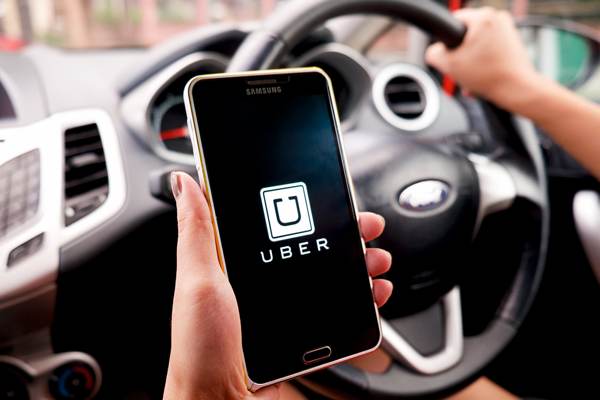
Surge pricing has long been Uber’s Achilles’ heel: during
periods of excessive demand, when there are more riders than drivers,
Uber increases its normal prices to encourage drivers to flood the zone.
Drivers love it, often waiting to sign-on to the platform until surge
pricing kicks in, but most passengers hate it and some critics equate it with price gouging.
Now, Uber is testing a new version of its app that makes
surge pricing nearly invisible to customers. The lightning bolt on the
home screen and pop-up box notifying riders that their fare will be
multiplied are both gone. Instead, riders who input their destinations
will be presented with an ironclad, upfront fare.
 Uber
Uber
So how will riders know when surge pricing is in effect?
After all, many penny-pinching riders prefer to wait until after it is
over before hailing a ride. Instead of an in-your-face,
blue-font-in-a-black-circle notification, the updated version of the app
warns riders with a line of faint text about “increased demand” located
under the fare. Other than that, surge pricing is MIA.
The theory is that riders would prefer to know how much
they’ll be paying for their trip, rather than be confronted with an
abstract multiplier that asks them to do some quick math in their head
before deciding on whether to hail a ride. “No math,” Uber says, “no
surprises.”
UberPool, the company’s carpooling service, was the first
to introduce upfront prices. Uber’s products division decided they
liked it enough to begin rolling out to its other services, including
its most popular, UberX. Starting in April, the company began testing
upfront fares in six US cities — New York City, Miami, San Diego,
Philadelphia, Seattle, and Jersey City; as well as five cities in India —
New Delhi (where Uber was forced recently to suspend surge pricing),
Kolkata, Mumbai, Hyderabad, and Chennai. In the next few months, Uber
expects to roll out upfront fares — and nearly invisible surge pricing —
to rest of its markets across the world.
